Phytoestrogens: what are they, and what can they actually help with?

If you have been looking into nutrition for perimenopause or menopause, you have probably come across the term phytoestrogens.
They are sometimes described as "natural oestrogen", while other conversations suggest women should avoid them altogether. Neither tells the full story.
Phytoestrogens are naturally occurring compounds found in a number of plant foods. They can interact with oestrogen receptors in the body, but they are not the same as human oestrogen and do not simply behave like oestrogen in every tissue (National Center for Complementary and Integrative Health [NCCIH], 2025).
So what can they actually do?
What are phytoestrogens?
Phytoestrogens are plant compounds with a chemical structure that allows them to interact with oestrogen receptors.
The main groups include:
Isoflavones, particularly genistein and daidzein, found mainly in soy
Lignans, found in foods such as flaxseed, sesame and whole grains
Coumestans, found in smaller amounts in foods such as legumes and sprouts (NCCIH, 2025)
Soy is the most extensively studied dietary source.
Tofu, tempeh, edamame and unsweetened soy milk can all provide meaningful amounts of isoflavones (NCCIH, 2025).
Are phytoestrogens the same as oestrogen?
No, and this distinction is important.
Phytoestrogens are considerably weaker than the body's own oestradiol. Their effects also depend on the particular compound, the tissue involved, the amount consumed and the individual's own hormonal environment.
Some are also metabolised by gut bacteria. For example, daidzein can be converted into equol, a compound with greater affinity for oestrogen receptors. Not everyone produces equol, which may partly explain why people can respond differently to phytoestrogen-rich foods (Chen et al., 2024).
So it is not as simple as:
low oestrogen + phytoestrogens = replacing oestrogen.
The biology is much more nuanced.
What might phytoestrogens help with?
Menopausal hot flushes
This is probably the area most often discussed.
Research into soy foods and isoflavones has produced mixed results. Some studies have found modest reductions in menopausal symptoms, while others have found little or no meaningful effect on hot flushes specifically (Gençtürk et al., 2024; Luan et al., 2025).
A recent systematic review and meta-analysis found a small overall improvement in some menopausal symptoms with soy isoflavones, but did not find a significant effect on hot flushes, excessive sweating or other vasomotor symptoms specifically (Luan et al., 2025).
So I would not describe phytoestrogens as a treatment for hot flushes.
For a woman who enjoys soy foods, however, including them regularly can still be a reasonable nutritional choice.
Bone health
Oestrogen decline during menopause is associated with increased bone turnover and, over time, greater risk of bone loss.
There is some evidence that soy isoflavones may have beneficial effects on bone health in postmenopausal women, although findings are not completely consistent. An umbrella review of meta-analyses found potential benefits of isoflavone interventions on some measures of bone metabolism, but also highlighted limitations in the evidence (Zhuge et al., 2025).
I therefore see phytoestrogen-rich foods as one small piece of the bone-health picture, alongside adequate protein, calcium, vitamin D, resistance exercise and weight-bearing activity.
Cardiovascular health
Soy foods and isoflavones have also been studied in relation to cardiovascular health.
A systematic review and meta-analysis of randomized trials found that isoflavones produced modest improvements in some blood lipid measures in postmenopausal women, although the effects varied according to age, dose and duration of intervention (Yang et al., 2023).
It is also worth remembering that the potential benefit of eating soy may not come solely from its phytoestrogen content. Replacing foods higher in saturated fat with nutritious soy foods can improve the overall quality of the diet.
A food does not have to behave like a medicine to be beneficial.
A useful source of plant protein
This is sometimes overlooked when we focus too heavily on phytoestrogens.
Tofu, tempeh and edamame provide protein, fibre and a range of micronutrients. They can be particularly useful for women eating a predominantly plant-based or vegetarian diet (NCCIH, 2025).
And as we move through midlife, maintaining adequate protein intake becomes increasingly important for supporting muscle mass and healthy ageing.
What about breast health?
This is where the conversation can become unnecessarily alarming.
Current evidence does not support the idea that normal dietary amounts of soy increase breast cancer risk. Observational research has, in some populations, associated higher soy intake with a lower risk of breast cancer, although this does not establish that soy itself prevents breast cancer (NCCIH, 2025).
That distinction matters.
Soy foods should not be viewed as a treatment or preventative medicine for breast cancer, and food is not necessarily equivalent to a concentrated isoflavone supplement.
If you have a history of breast cancer, take endocrine treatment, or have another hormone-sensitive condition, it is sensible to discuss concentrated phytoestrogen or isoflavone supplements with your doctor or specialist. Evidence regarding the long-term safety of concentrated supplements is less established than that for ordinary dietary soy (NCCIH, 2025).
"Natural" does not automatically mean appropriate for everyone.
Food first
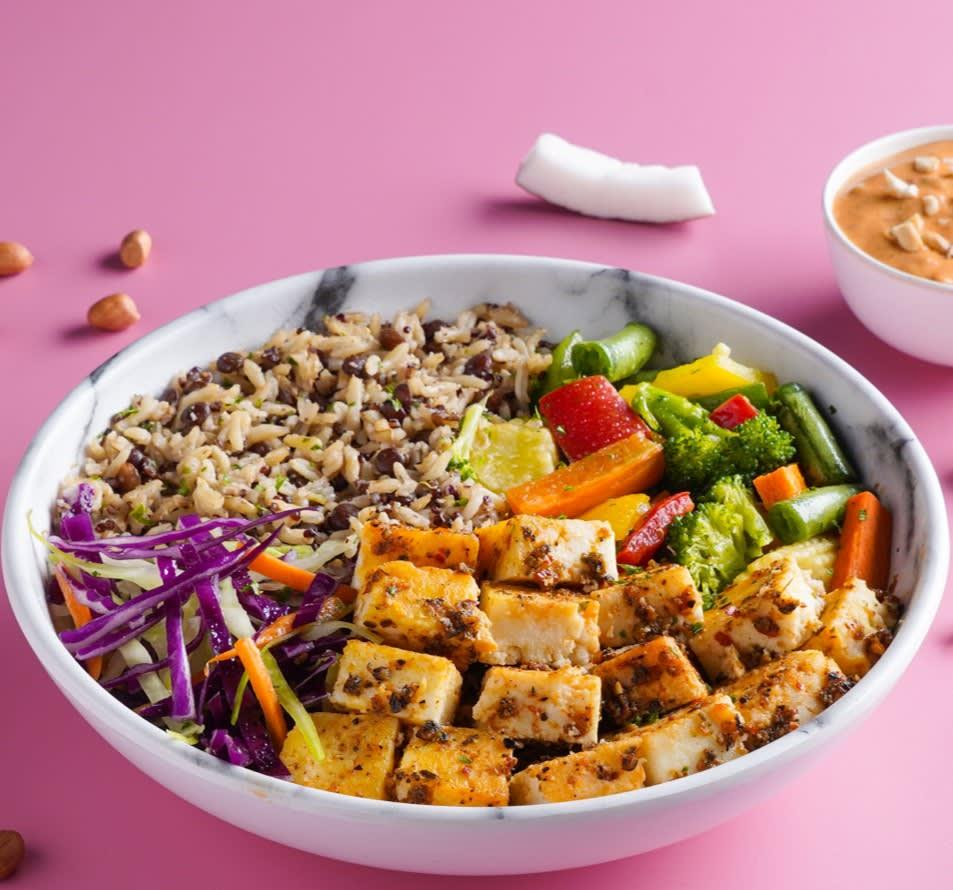
When I talk about phytoestrogens from a nutritional perspective, I am primarily talking about foods, rather than high-dose supplements.
Good dietary sources include:
tofu
tempeh
edamame
unsweetened soy milk
ground flaxseed
sesame seeds
beans and other legumes
whole grains
You do not need to eat huge quantities or follow a special "hormone-balancing" diet.
A varied diet that regularly includes plant foods is a much more useful approach.
For example, you could add ground flaxseed to porridge, use tofu or tempeh in a stir-fry, or add edamame to a grain and vegetable bowl.
The bottom line
Phytoestrogens are neither a miracle cure nor something women need to fear.
The evidence is nuanced. Certain phytoestrogen-rich foods, particularly soy, may offer nutritional and potentially modest health benefits, but the evidence is not strong enough to describe phytoestrogens as a replacement for oestrogen or as a treatment for menopause itself (NCCIH, 2025).
For me, the most sensible approach is food first, variety first and the whole dietary pattern first.
Phytoestrogen-rich foods can sit comfortably within a balanced menopause diet, alongside adequate protein, fibre, healthy fats, calcium, vitamin D and a wide variety of plant foods.
And, as always, individual context matters. Your symptoms, nutritional needs, health history, medications and personal preferences all form part of the picture.
Rather than looking for one food to "balance" your hormones, I prefer to look at what your body needs as a whole.
This article is for general educational purposes and does not replace individual medical advice. If you have a medical condition, a history of hormone-sensitive cancer, or take prescription medication, speak with your GP or specialist before starting concentrated phytoestrogen or isoflavone supplements.
References
Chen, L., et al. (2024). From gut to hormones: Unraveling the role of gut microbiota in (phyto)estrogen modulation in health and disease. Molecular Nutrition & Food Research.
Gençtürk, N., Bilgiç, F. Ş., & Kaban, H. U. (2024). The effect of soy isoflavones given to women in the climacteric period on menopausal symptoms and quality of life: Systematic review and meta-analysis of randomized controlled trials. Explore, 20(6), 103012. https://doi.org/10.1016/j.explore.2024.05.010
Luan, H., Liu, Q., Guo, Y., Fan, H., A., S., & Lin, J. (2025). Effects of soy isoflavones on menopausal symptoms in perimenopausal women: A systematic review and meta-analysis. PeerJ, 13, e19715. https://doi.org/10.7717/peerj.19715
National Center for Complementary and Integrative Health. (2025). Soy: Usefulness and safety. National Institutes of Health.
Yang, S., Zeng, Q., Huang, X., Liang, Z., & Hu, H. (2023). Effect of isoflavones on blood lipid alterations in postmenopausal females: A systematic review and meta-analysis of randomized trials. Advances in Nutrition, 14(6), 1633–1643. https://doi.org/10.1016/j.advnut.2023.09.008
Zhuge, L., Chen, L., & Pan, W. (2025). Effects of isoflavone interventions on bone metabolism in perimenopausal and postmenopausal women: An umbrella review of meta-analyses of randomized controlled trials. Endocrine Practice, 31(2), 226–235. https://doi.org/10.1016/j.eprac.2024.08.009


Comments